Perugino
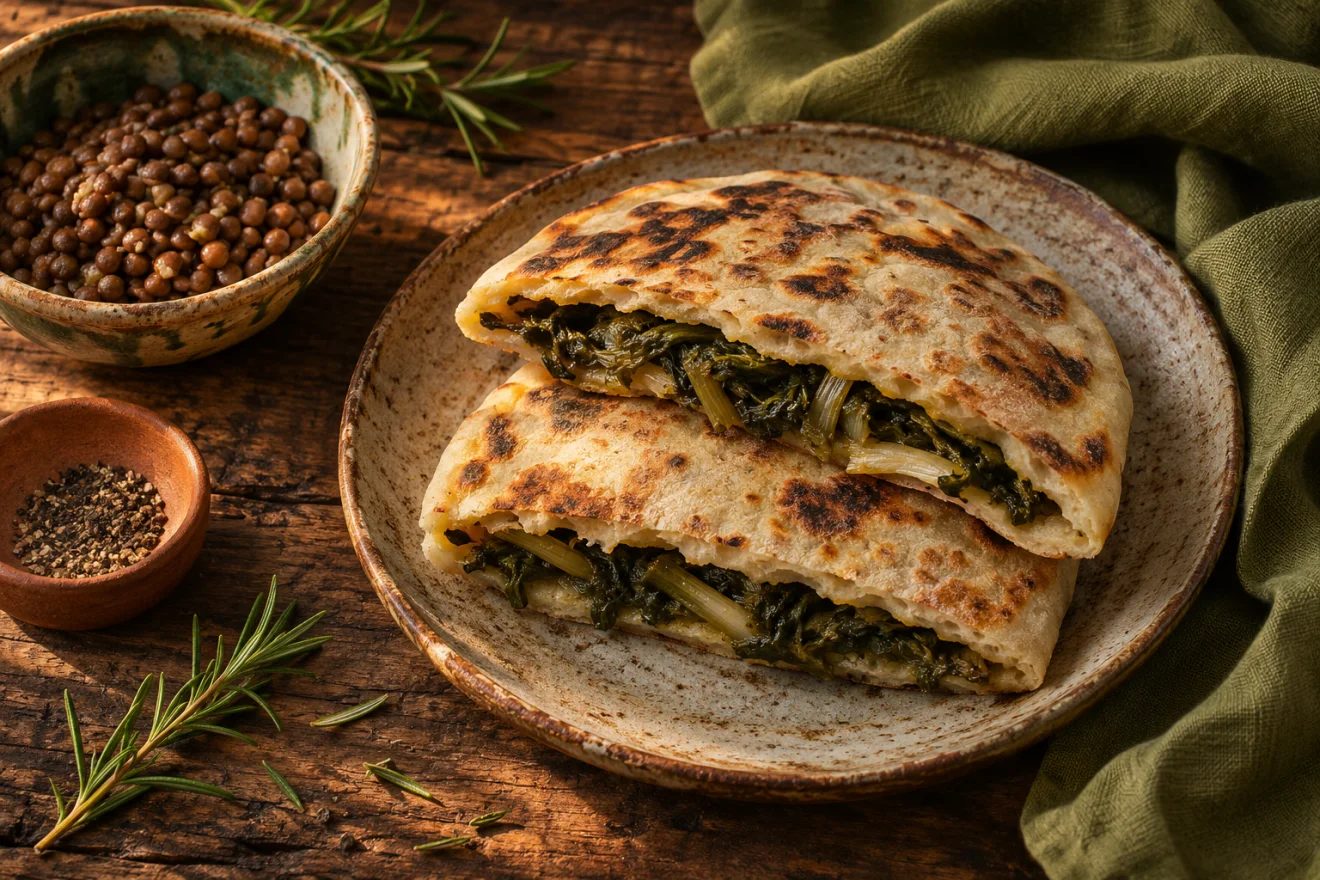
Umbrian torta al testo with sautéed chicory
The testo is the round griddle on which this Umbrian flatbread cooks.
Ingredients
- 360 g Italian type 1 wheat flour, plus extra for rolling
- 200–215 ml room-temperature water
- 18 g extra virgin olive oil
- 8 g baking powder for savoury bakes
- 6 g fine salt
- 450 g trimmed chicory greens
- 20 g extra virgin olive oil
- 1 garlic clove
- 1 pinch of chilli flakes
- 85 g semi-mature pecorino
- Salt to taste
Method
- Mix the flour, salt and baking powder in a bowl. Add the oil and about 200 ml of water. Add the rest of the water a little at a time if dry flour remains. Knead for 4–5 minutes. Cover and rest for 25 minutes.
- Meanwhile, boil the chicory in lightly salted water for 6–9 minutes, until the stems are tender. Drain, cool slightly, squeeze dry and roughly chop. Sauté in the oil with the garlic and chilli for 4–5 minutes, until the remaining water evaporates.
- Divide the dough in two. Roll each piece into a round about 20 cm across and just under 1 cm thick. Prick the surface with a fork.
- Heat a dry frying pan over a medium heat. Cook one flatbread at a time for 5–7 minutes on each side. Turn it when toasted spots appear on the underside. Lower the heat if the surface darkens before the bread firms up. The centre should be dry and cooked through when cut.
- Wrap the flatbreads in a clean tea towel and leave them to settle for a few minutes. Cut into wedges, split with a serrated knife and fill with warm chicory and shaved pecorino.
From the region
The story behind the dish
The testo is the round griddle used to cook the dough. Umbria’s regional tourism site describes how an old stone griddle gave way to cast iron and other materials suitable for embers and stovetops. The griddle gives the bread its flat shape and explains why cooks turn it over the heat so that it browns evenly. The bread is then split and filled, often with greens, sausage, cured meats or cheese. Around Perugia it goes by torta al testo. Umbria Tourism also points to the related crescia in Gubbio, ciaccia in Città di Castello and pizza sotto il fuoco in Terni. Each town offers its own take on the dough and how to cook it. In the Panulio version for home kitchens, a cast-iron pan takes the place of the griddle and the bread is filled with chicory and pecorino.
Panulio home adaptation · Times and yield are approximate.